Travel Guide · North & East
Jaffna: Sri Lanka’s Tamil Heart
The Jaffna Kingdom, the gopurams of Nallur, and a library rebuilt as a symbol of a people’s resilience.
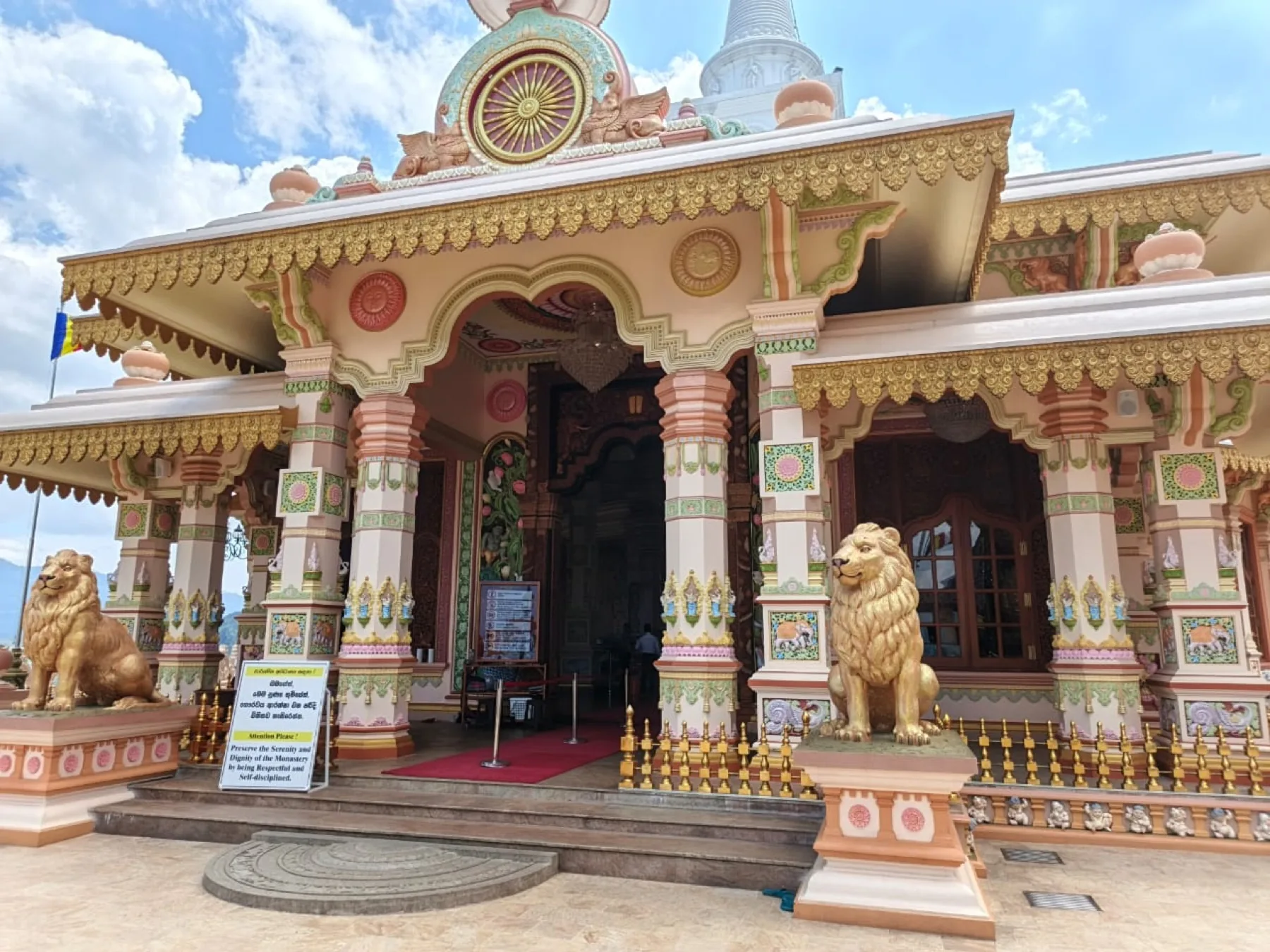
Jaffna feels, in the best way, like a short ferry ride from South India — and in many ways it is. Sri Lanka’s northern capital is the heartland of the island’s Tamil people, predominantly Hindu, with its own language, its own temples, its own unmistakable cuisine and a history quite separate from the Sinhalese south. The independent Jaffna Kingdom ruled the north from 1215 until the Portuguese conquered it in 1624, and that long history of self-rule still runs through the city’s identity. For travellers who’ve done the Cultural Triangle and the south, Jaffna is the part of Sri Lanka that feels genuinely undiscovered.
The spiritual centre of the city is the Nallur Kandaswamy Kovil, one of the most important Hindu temples in the country, its golden gopuram tower rising in tiers of brightly painted deities above the surrounding streets. Dedicated to the war god Murugan, it’s a serene, deeply atmospheric place at the daily pujas — bare-chested priests, camphor flame, the sound of the nadaswaram horn. Each July and August it explodes into the Nallur Festival, twenty-five days of processions, chariots and acts of devotion that draw pilgrims from across the Tamil world; if you’re here for it, it’s unforgettable, and I’ll plan around the dates.
No story of Jaffna leaves out the library. The Jaffna Public Library was once one of the great libraries of Asia, holding tens of thousands of irreplaceable Tamil manuscripts and texts — and in 1981 it was burned to the ground, a wound that the Tamil community still feels keenly. Its painstaking restoration, the gleaming white building you can visit today, has become a symbol of resilience and recovery for the whole region. I take guests there not just for the architecture but for what it represents, and I’ll tell the story straight.
Down by the lagoon stands the Jaffna Fort, a vast Dutch star fort built from 1680 on Portuguese foundations — once one of the strongest fortifications in Asia, badly damaged in the war, and now partly restored, its ramparts giving long views over the water. From the fort you can drive out across the causeways of the peninsula to Casuarina Beach on Karainagar, a shallow, calm, swimmable strand backed by its namesake trees, and to the sacred freshwater springs at Keerimalai, set right beside the sea. Push on to Point Pedro and you reach the northernmost tip of the island.
For something extraordinary, I’ll take you out to the islands. A short ferry from the peninsula reaches Nainativu, home to both the Buddhist Nagadeepa Purana Vihara and the Hindu Nagapooshani Amman Kovil — two of the most revered sites of their respective faiths, side by side on one small island, a snapshot of the layered devotion that defines this coast. And further out lies Delft Island, with its wild ponies and ancient baobab, which is worth a guide of its own.
Then there is the food, which alone justifies the drive north. Jaffna’s cuisine is distinct from the rest of Sri Lanka — hotter, built on the produce of the dry peninsula and the palmyra palm. The signature dish is Jaffna crab curry, rich and fiery; alongside it you’ll find dosai and idli, crisp vadai, and odiyal kool, a thick palmyra-and-seafood broth. Even the ice cream is famous: a stop at Rio Ice Cream is a Jaffna institution. I know where the good, unfussy local places are, and I’ll happily order for you if the heat is a worry.
Now the honest practicalities. Jaffna is a long way north — the better part of a day’s drive from Colombo up the A9 highway, or four to five hours from the Cultural Triangle, which is the approach I prefer. That distance is exactly why most itineraries skip it and why so few travellers make it up here. It’s also why going with a driver who knows the road makes it easy: I handle the long haul, the navigation and the cultural ground — the temple etiquette, the right times to visit, the islands and their ferries — so you arrive relaxed and spend your energy on Jaffna itself. The best season is May to September, when the north is warm and dry.
From the driver’s seat: give Jaffna at least two nights — it’s too far and too different to do justice in a day. Dress modestly for the temples, and remember the festival dates if you’re travelling in July or August. And come with an appetite: the long drive north is repaid in full the first time you sit down to a Jaffna crab curry with the lagoon breeze coming through the window.
How I plan two days in Jaffna. Day one: we leave the Cultural Triangle after breakfast and take the A9 north — about four hours with a stop at the Elephant Pass memorial — arriving in time for the evening puja at Nallur, then sunset on the ramparts of the Dutch fort and a crab curry in town. Day two: an early drive across the causeways to Kurikadduwan for the ferry to Nainativu or Delft Island, back by mid-afternoon for Keerimalai springs, Casuarina Beach and, if there is light, Point Pedro at the top of the island. Day three: south again to Trincomalee (four hours) or Anuradhapura (three) to continue the loop.
Where to stay and what it costs: Jaffna has small guesthouses and two or three good mid-range hotels in the Essentials and Boutique tiers; the driving on this leg is USD 75 per day all-in, and the island ferries and temple entries are small separate lines in the quote.