Travel Guide · Food & culture
How Buddhism, India, empire and tourism shaped Sri Lankan cuisine
The island’s table is a living record of religion, trade, empire and travel — and the best way to taste it is on the road.
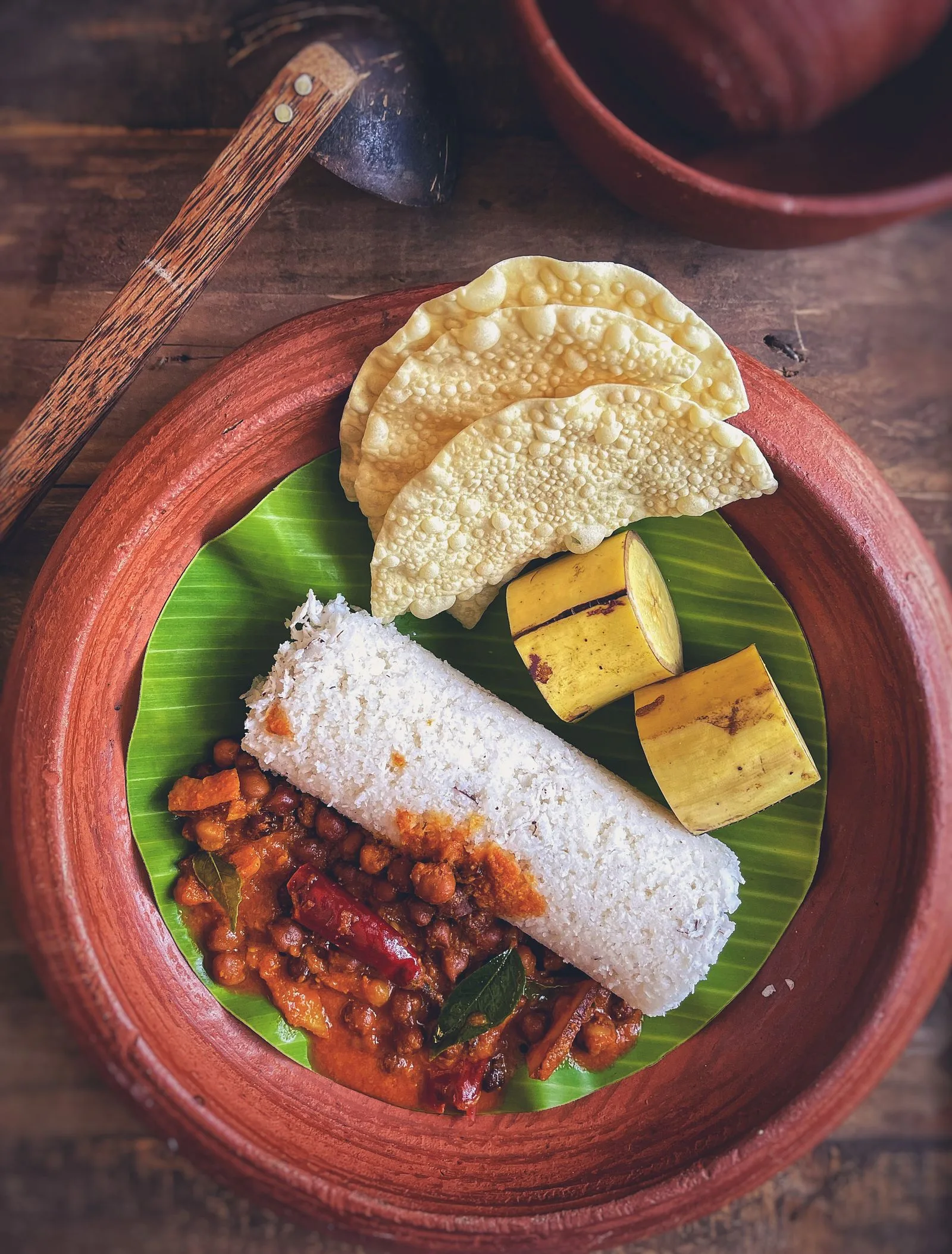
Sri Lanka’s table is a living record of religion, migration, ocean trade, empire and modern travel. Guests often ask what to eat where — this is the longer answer, written so you can taste the island as a journey rather than a single national dish.
Sri Lankan cuisine is sometimes described as a variation of Indian food. That description misses the real story. The island shares ingredients, cooking methods and cultural links with southern India, but its food also carries the influence of Buddhist values, ancient farming, Indian Ocean trade, European colonial rule and the expectations of modern travellers.
A Sri Lankan meal is therefore more than a collection of curries. It is a record of migration, religion, agriculture, empire and adaptation. Rice, coconut, seafood, lentils, leafy vegetables and spices form its foundation, yet the way they are cooked changes from Jaffna to Kandy, from the dry-zone villages near Sigiriya to the seafood kitchens of Galle and Trincomalee.
The best way to understand Sri Lankan food is not to search for one national dish. It is to follow the history, geography and communities behind the meal — and, on a private route, to fit those meals into realistic travel days.
The island’s original food foundation
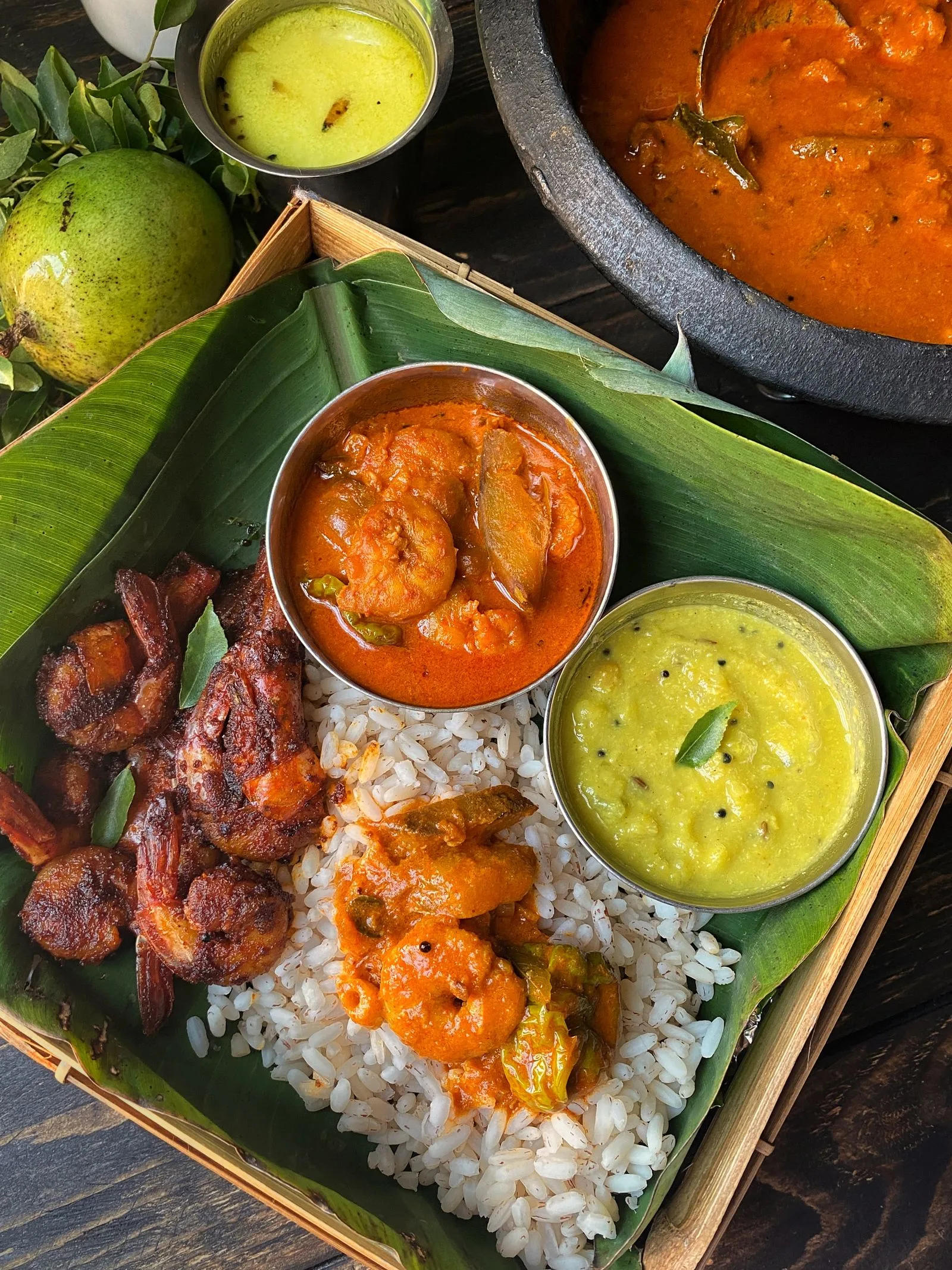
Long before European ships arrived, Sri Lankan communities had developed food systems around the island’s varied climate and geography. Monsoon rain, dry-zone plains, central highlands, lagoons and a long coastline created several food environments within a relatively small country. Ancient irrigation networks made paddy cultivation possible across areas that would otherwise have been too dry.
Rice became much more than a staple. It was a measure of security, a ceremonial food and a base for countless preparations — boiled for a daily meal, cooked with coconut milk as kiribath, ground into flour for hoppers and string hoppers, or combined with grains and pulses. A traditional plate balances the main starch with dhal, vegetable curries, mallung made from finely cut greens, sambols, pickles and, depending on region and custom, fish or meat.
Coconut is the second great organising ingredient. Freshly scraped coconut gives texture to pol sambol and mallung; coconut milk softens and carries spice in curries; coconut oil is used for frying and tempering; and treacle or jaggery adds sweetness to desserts. Curry leaves, pandan, black pepper, cinnamon, cardamom, cloves, fenugreek, mustard seed, turmeric, tamarind, lime and goraka create layers of aroma, heat, bitterness and sourness rather than one single “curry flavour”.
Buddhism changed the meaning of food
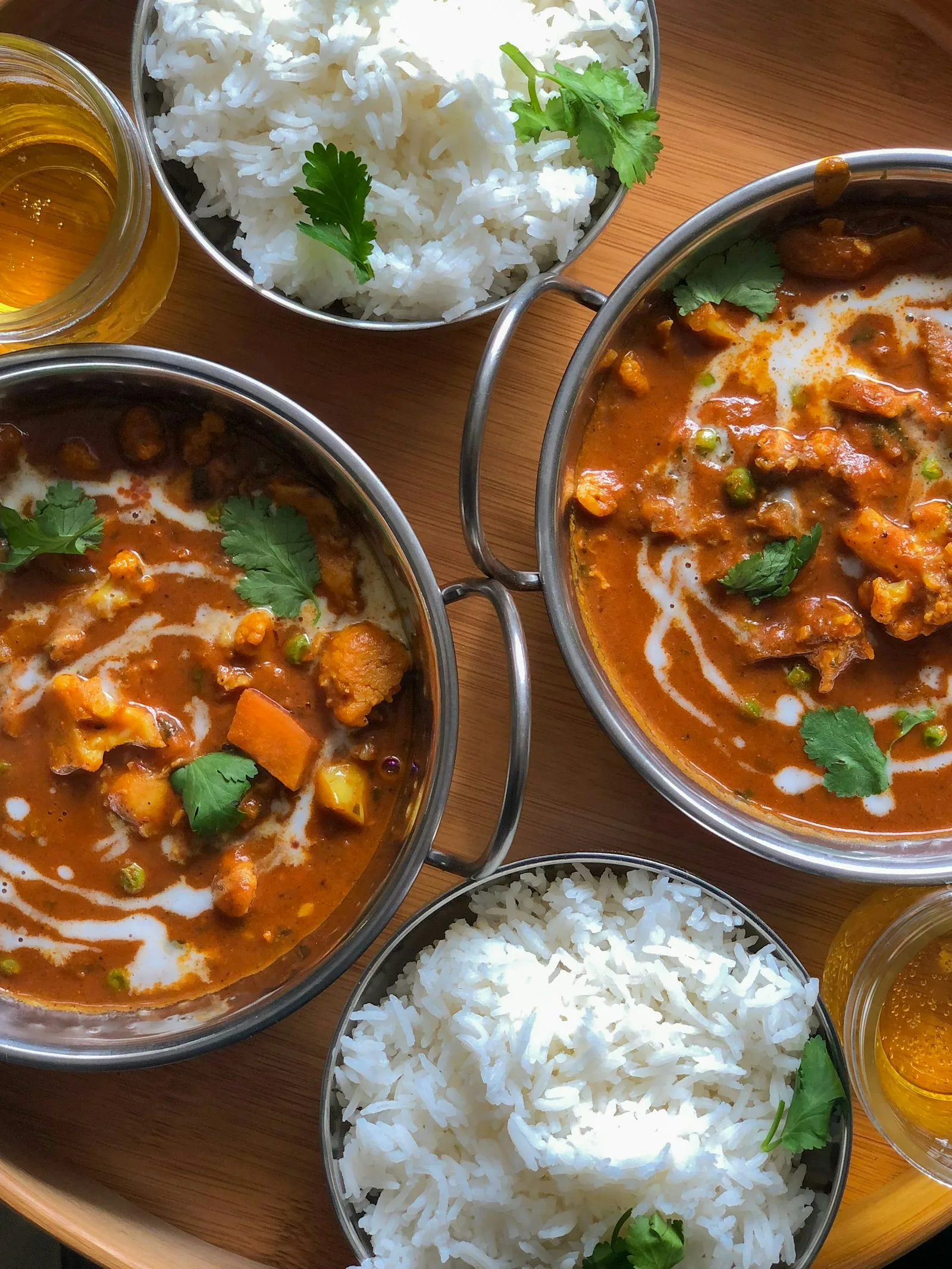
Buddhism became firmly established in Sri Lanka during the ancient Anuradhapura period. Its culinary influence should not be reduced to the claim that Sri Lankan food is vegetarian. Fish, seafood and meat have long been part of many diets, and Theravada Buddhist practice does not require every layperson to follow a vegetarian diet. The deeper influence lies in the ethics and social meaning surrounding food.
Dana — the act of giving — makes the preparation and sharing of food a religious and community practice. Families offer meals to monks, support temple festivals, feed pilgrims and share food with neighbours. Hospitality becomes a moral action rather than only entertainment.
Buddhist ideas of compassion and restraint have also helped sustain a remarkably wide plant-based repertoire. A single meal can include jackfruit, breadfruit, aubergine, pumpkin, ash plantain, beans, gourds, mushrooms, lentils, cashews, leafy greens and coconut without being presented as a special vegetarian menu. Ceremonial foods such as kiribath appear at New Year, birthdays and auspicious beginnings.
India: familiar, but not the same
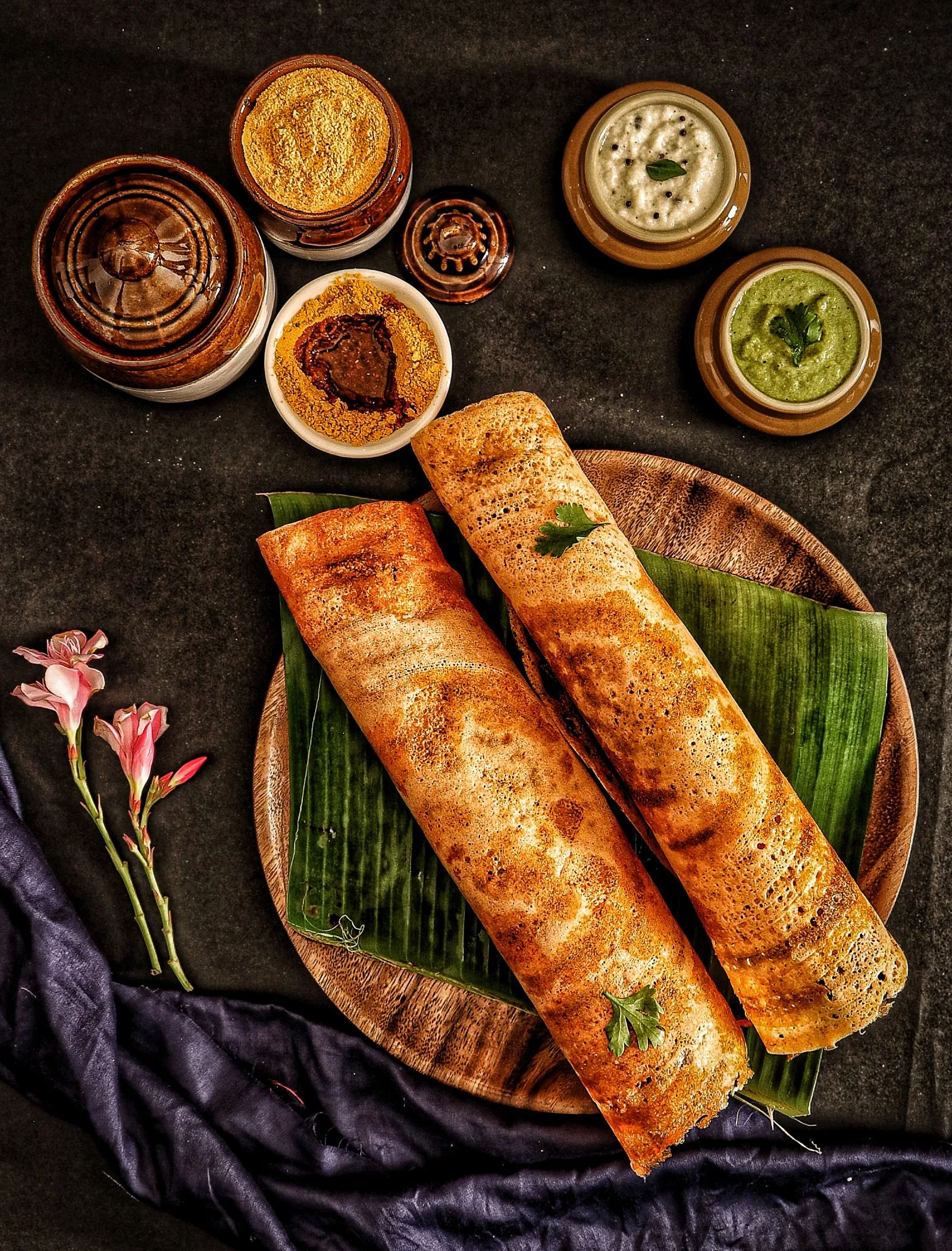
Sri Lanka sits just across the Palk Strait from southern India. Trade, migration, royal marriage, pilgrimage, labour and family connections have moved people and cooking knowledge between the two lands for centuries. That closeness explains a shared vocabulary of rice, lentils, coconut, tamarind, curry leaves, mustard seeds and fermented rice batters.
Hoppers, string hoppers, pittu, dosai, vadai, idli and biryani belong to wider South Asian traditions, but they have become part of Sri Lanka’s own everyday life. Northern Tamil cooking has especially strong links with Tamil Nadu, while the food of the central tea estates reflects the heritage of South Indian workers brought to the highlands during British rule.
Similarity should not be confused with sameness. Sri Lankan cooks often use deeply roasted curry powders, coconut milk, pandan, goraka, Maldive fish and intensely flavoured sambols. A Sri Lankan curry may be thinner, darker, more sour or more sharply spiced than a visitor expects from Indian restaurant food elsewhere. Jaffna demonstrates this regional identity particularly clearly — dry climate, palmyrah products, seafood, crab, goat, roasted spices and chilli.
Indian Ocean traders: Arab, Malay and beyond
Long before European conquest, Sri Lanka’s ports linked the island with Arabia, Persia, Southeast Asia and wider Asian trade. Merchants came for cinnamon, gems and access to maritime routes. Some settled, married locally and created communities whose food became part of the island’s national story.
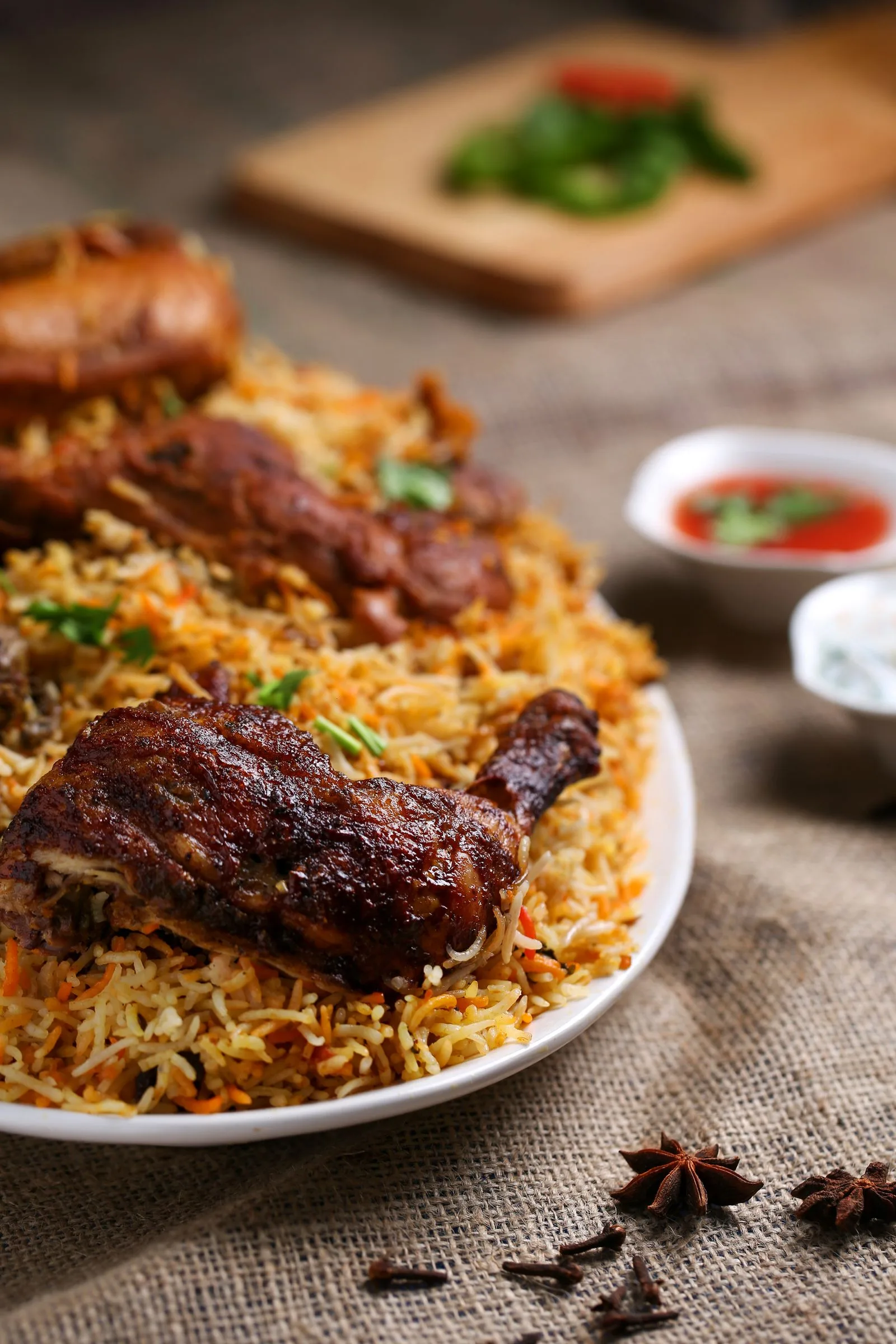
Sri Lankan Muslim cooking carries these trading-world connections in biryani, rich meat dishes, pickles, sambols and festive sweets. Malay heritage is visible in foods such as wattalappam, a steamed coconut custard scented with jaggery and spice. The pattern is familiar throughout Sri Lankan history: an imported form is absorbed, altered by local ingredients and eventually treated as home cooking.
Portuguese, Dutch and British flavours
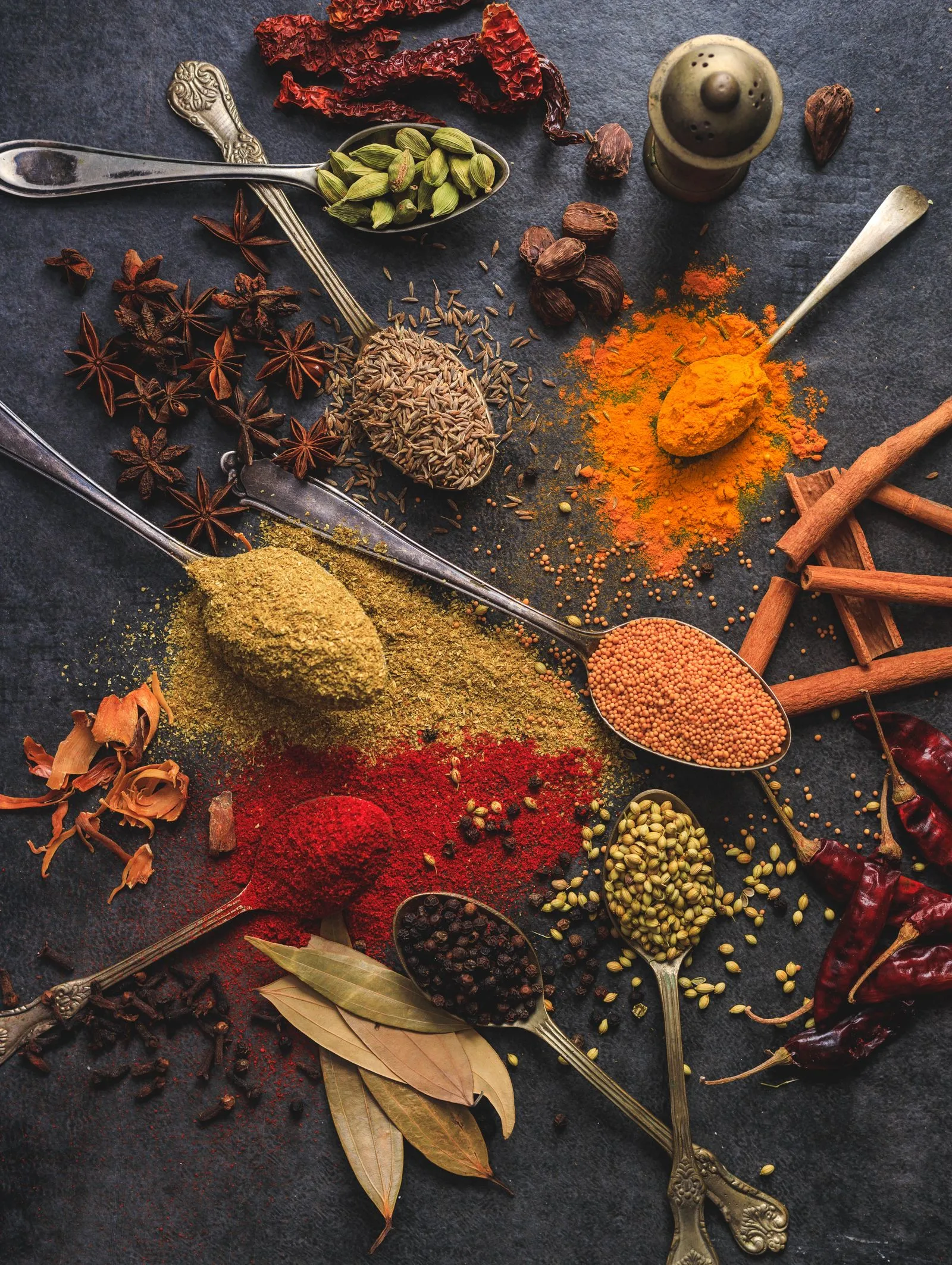
Western influence arrived through trade and then colonial control. Portuguese, Dutch and British rule changed ingredients, agriculture, labour and ideas of dining, but local cooks rarely accepted foreign food unchanged.
The Portuguese period helped make red chilli increasingly important. Chilli originated in the Americas and travelled through European-controlled trade networks before becoming so thoroughly naturalised that many people now imagine it has always defined Sri Lankan cooking. Portuguese and Catholic communities also contributed confectionery, preserved foods and festive baking traditions.
Dutch and Burgher kitchens produced some of the island’s best-known hybrid foods. Lamprais combines rice cooked in stock with meat, sambols and accompaniments, then wraps the meal in banana leaf for baking. Kokis, the crisp rice-flour and coconut-milk sweet associated with Sinhala and Tamil New Year, carries a name linked to the Dutch word koekje.
British influence changed both the menu and the landscape. The plantation economy made Ceylon tea a global product and brought large numbers of South Indian workers to the central highlands. Wheat-based bread and bakery products became more common, while cabbage, carrots, potatoes, beetroot, beans and leeks were cultivated in the cooler hills. Tea, cakes, puddings and hotel dining left traces that remain visible today — usually reworked to suit local taste.
Tourism is writing the next chapter
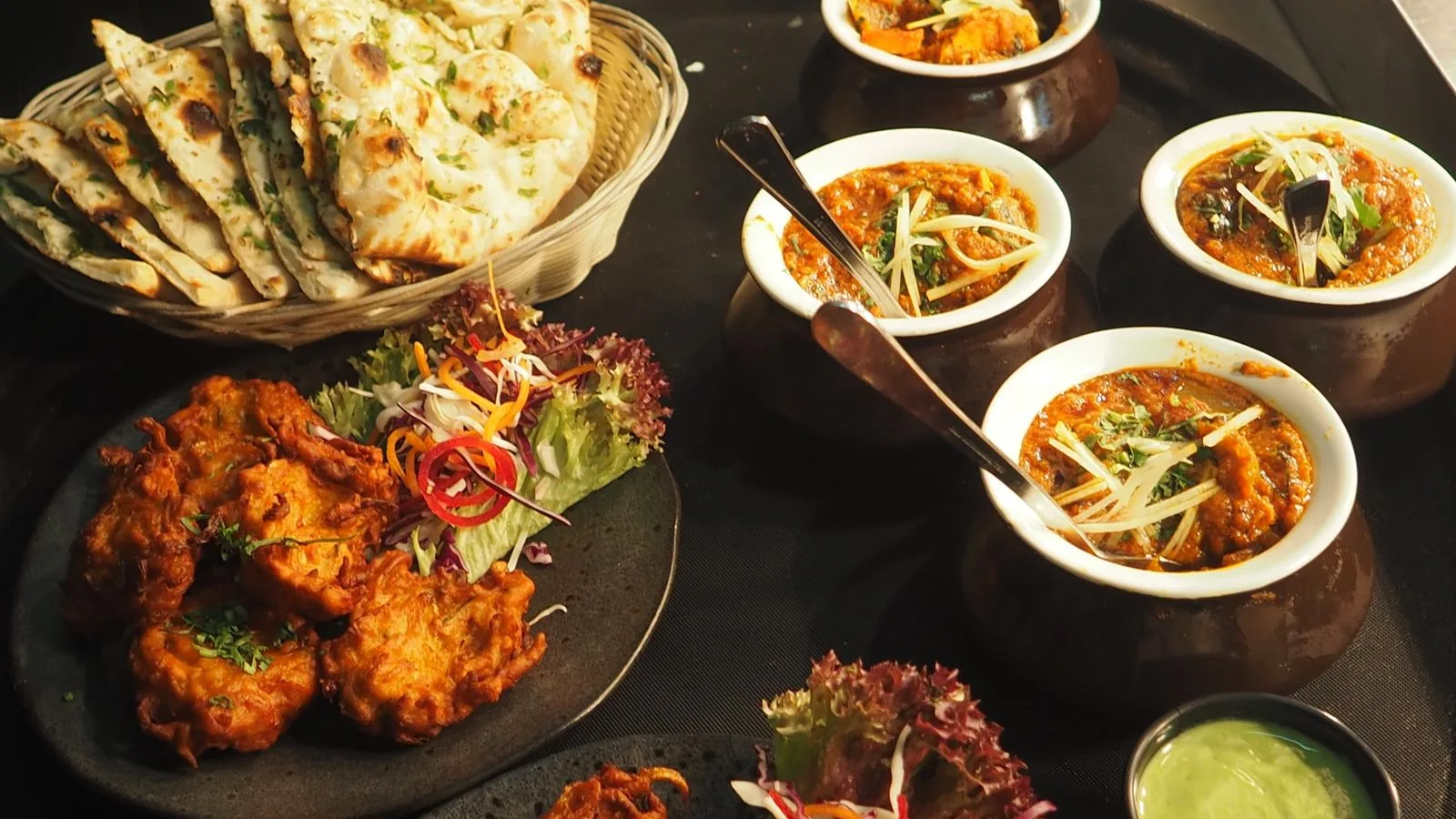
Tourism is now one of the strongest forces changing how Sri Lankan food is presented. Sri Lanka recorded 2,362,521 international arrivals in 2025 — a 15.1 percent increase from 2024 and the highest annual total in the country’s history. The first six months of 2026 brought a further 1,146,573 visitors (SLTDA figures).
Food is increasingly part of what those travellers come to experience. Cooking classes, market walks, village lunches, tea tastings, seafood dinners, street-food tours and home-hosted meals now sit beside beaches, temples and safaris in many itineraries. Colombo, Galle, Ella and the beach towns support modern cafes, bakeries and fusion restaurants that combine global presentation with Ceylon spices, local seafood and tropical produce.
Adaptation is not automatically harmful; Sri Lankan food has always changed. The risk appears when spice is removed rather than explained, or when every visitor receives the same generic “rice and curry.” A private driver helps keep the balance: the most memorable meal may be a clean family-run lunch stop, a Tamil vegetarian cafe, a roadside hopper stall or a seafood kitchen recommended because the catch is good that day.
One island, several regional food journeys
The history of Sri Lankan food becomes easier to taste when it is followed by road. Ceylon Drives uses flexible route frameworks rather than rigid group-tour packages, so food stops can follow the destination, season and traveller.
On the Classic Sri Lanka route, the journey moves from Colombo and the airport through Dambulla and Sigiriya, Kandy and the tea country, Ella and safari country, before finishing around Mirissa and Galle. The food can move from cosmopolitan Colombo dining to dry-zone vegetable curries, Kandyan flavours, estate-country Tamil food, roadside roti and southern seafood.
The East Coast route links the Cultural Triangle with Trincomalee or Passikudah — coconut-rich Tamil cooking, crab, prawns, lagoon fish and informal beach restaurants. A Wildlife and Safari journey needs meal stops that work around dawn park entries and long rural drives. The North and East offer the strongest change of culinary landscape: Jaffna’s palmyrah, dosai, vadai, biryani and highly roasted spice blends; Trincomalee and Passikudah return the journey to seafood and east-coast Tamil traditions.
How to experience Sri Lankan food responsibly
You do not need to become a food historian to support the culture behind a meal. Ask what is seasonal, try a regional speciality, allow the cook to recommend the level of spice, and choose locally owned places alongside celebrated restaurants. Ordering several dishes to share often reveals more of the cuisine than selecting one familiar main course.
Online ratings are only one tool. They can identify consistency and service, but they may overlook small places, new businesses and foods that require explanation. Hygiene, opening hours, route access and honest local knowledge should be considered together with a score.
Routes and selected food stops
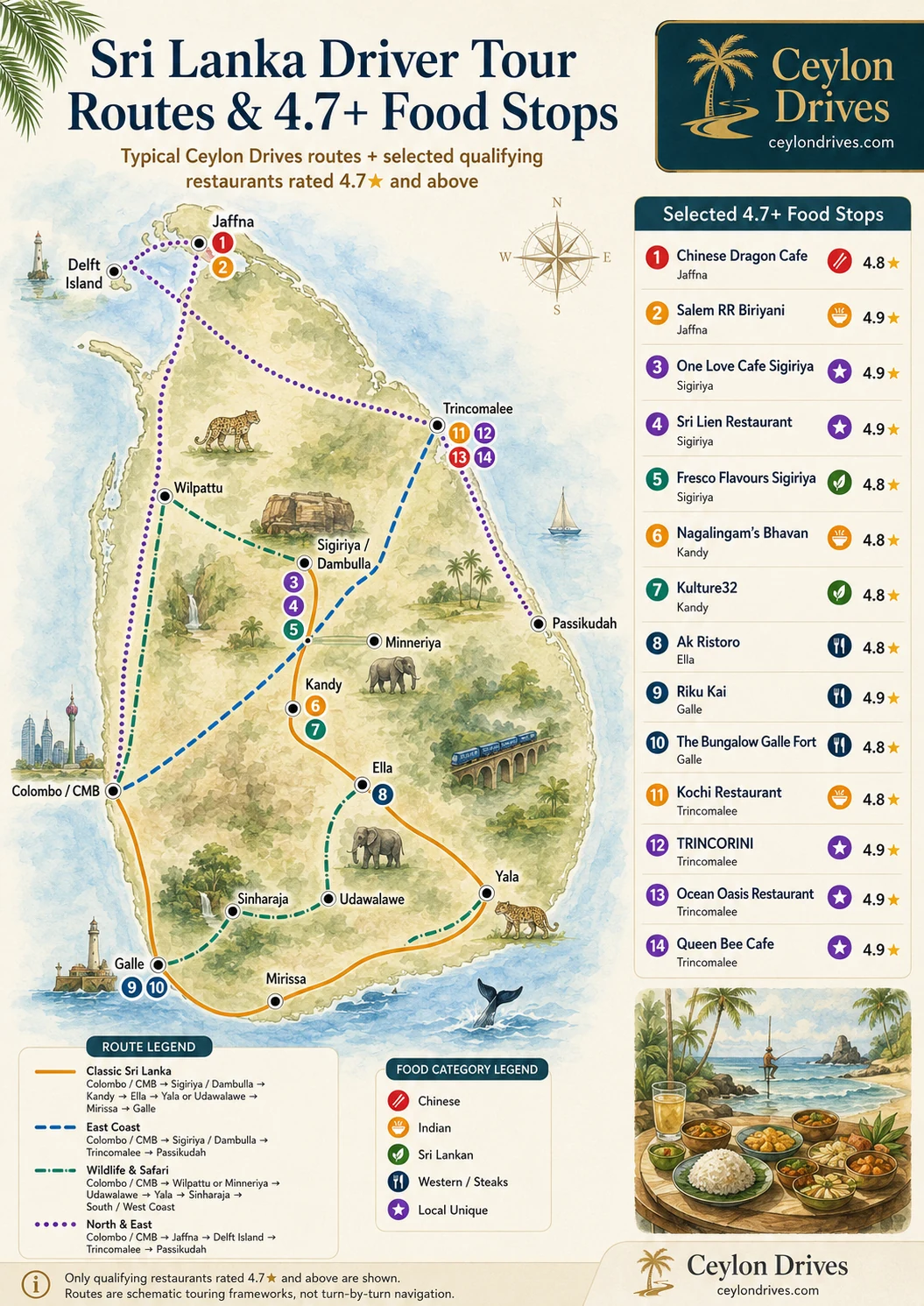
The map below pairs Ceylon Drives route frameworks with a shortlist of restaurants that met a 4.7+ live-rating threshold at compilation. Classifications were checked (for example, Indian restaurants are not filed as Chinese). Owner favourites below the threshold — such as 88 Chinese Restaurant in Colombo — stay as conversation notes on the road, not ranked map pins.
Selected meal stops
27 places · 4.7+ when compiled (July 2026) · recheck ratings before you go.
Colombo3
- Life’s Good Kitchen
- WILDISH
- Madras Darbar Indian Restaurant
Sigiriya3
- One Love Cafe Sigiriya
- Sri Lien Restaurant
- Fresco Flavours Sigiriya
Kandy2
- Nagalingam’s Bhavan
- Kulture32
Ella3
- Matey Hut Ella
- Ak Ristoro
- Cafe UFO Ella
Galle3
- Riku Kai
- The Bungalow Galle Fort
- Double Barrel Restaurant Galle
Jaffna4
- Salem RR Biriyani Jaffna
- Chinese Dragon Cafe – Jaffna
- Vel Murugan Appam
- A Plus Biriyani Jaffna
Trincomalee9
- Queen Bee Cafe
- TRINCORINI
- Trincomalee Thambi Italian Restaurant
- Ocean Oasis Restaurant
- Canberra Beach Restaurant & Cabana
- Snack Bar Hawaii
- Ceylon Tamilan Restaurant
- Kochi Restaurant
- Trinco Lanka Restaurant
The strength of Sri Lankan cuisine is not purity. It is the ability to absorb change without losing its centre. Rice, coconut, spice, season, locality and hospitality continue to hold the meal together. For travellers, the most rewarding approach is to taste the island as a journey — from a village rice-and-curry lunch near Sigiriya and Tamil vegetarian cooking in Kandy or Jaffna to tea-country snacks, east-coast seafood and contemporary dining in Colombo or Galle.
Explore the routes
Classic Sri Lanka tour
Cultural Triangle, Kandy, tea country, safari and the south — meal stops planned into the loop.
View routeNorth & East route
Tamil kitchens, biryani, crab and east-coast seafood on a less-visited circuit.
View routeWildlife & safari
Dawn park entries with reliable breakfasts and family lunch stops between drives.
View routeAll private tours
Compare wildlife, family, honeymoon, temples, tea country and short escapes.
View routeSources & further reading
- Mihiranie et al., “Indigenous and traditional foods of Sri Lanka,” Journal of Ethnic Foods (2020)
- Weerasekara et al., “Nutrition Transition and Traditional Food Cultural Changes in Sri Lanka,” Foods (2018)
- Sri Lanka Tourism Development Authority, Year in Review 2025
- SLTDA monthly tourist arrivals reports 2026